This sermon by Pastor Adekoye Sanni explores Hebrews 12:1-2 and shows how Jesus initiates and sustains our faith. It emphasizes walking by faith, not sight, and explains that true faith is active — demonstrated through forgiveness, giving, and stepping out despite uncertainty.
The message encourages listeners to anchor their confidence in God’s faithfulness, to accept or return to Christ if needed, and to trust that God is completing the work He started in their lives.
5 Day Devotional
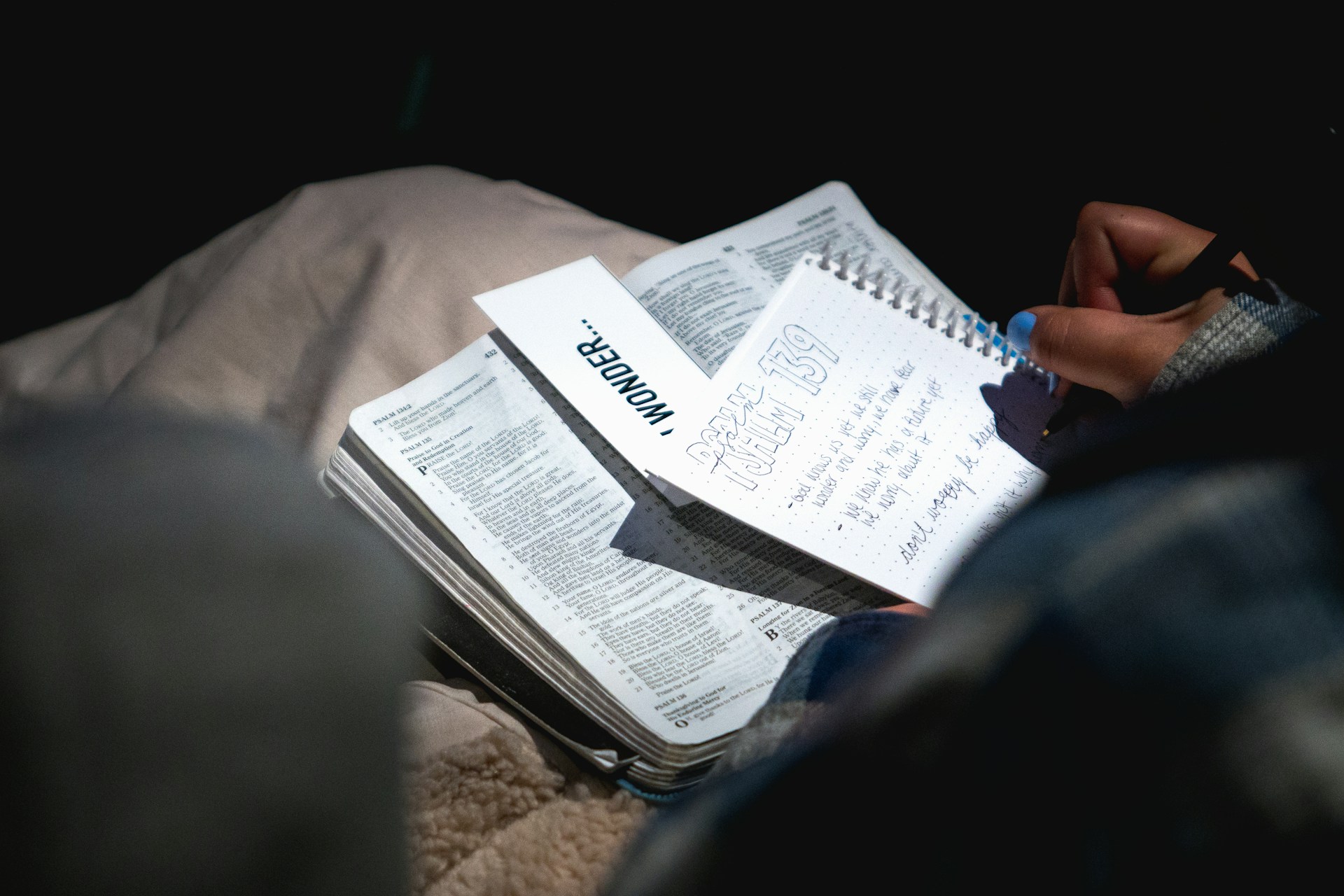
This five-day devotional invites you to move from merely talking about faith to actively living it, anchored in Jesus who initiates and perfects your faith. Each day builds on the sermon’s call to release weights, trust God’s faithfulness, and keep running even when the story feels unfinished. As you reflect, ask the Lord to align your heart, your actions, and your endurance with Christ.
Day 1
Hebrews 12:1-2
Faith grows clearer when you remember you are not running alone. Hebrews describes a “great cloud of witnesses” and then gives a practical instruction: strip off every weight and the sin that trips you up. The sermon reminded us that incomplete does not mean abandoned—your story is still being written, and your present strain is not your final chapter.
Fixing your eyes on Jesus keeps your faith from becoming self-powered and outcome-obsessed. Jesus is not only your example; He is the One who initiates and perfects faith. When the pressure rises, faith is not passive resignation—it is choosing to look to Christ, to keep moving, and to lay down what slows you so you can run with endurance.
- What is one “weight” (not necessarily sin) that has been slowing your spiritual progress lately?
- What recurring sin or pattern “so easily trips you up,” and what is one concrete boundary you can set today?
- Where have you been interpreting “incomplete” as “abandoned,” and how does fixing your eyes on Jesus change that perspective?
- What does it look like for you to “run with endurance” this week in one specific area (family, work, health, prayer)?
- Take 3 minutes to pray: “Jesus, initiate what I cannot start, and perfect what I cannot finish. Help me run light and focused.”
Day 2
Philippians 1:6
God’s faithfulness is the foundation under your progress. Philippians 1:6 promises that the One who began a good work in you will carry it on to completion. The sermon emphasized that Christ is still writing your story, and you should not define the success of your faith by immediate outcomes, but by God’s faithfulness.
This changes how you interpret delay, setbacks, and unfinished chapters. If God started the work, He will sustain it—so you can keep moving even when you cannot see the last page. Faith acts by continuing to obey, to pray, to serve, and to hope, not because everything feels resolved, but because God is reliable.
- Where do you feel most “unfinished” right now, and what would it mean to believe God is still working there?
- What is one outcome you’ve been using to measure your faith, and how can you replace it with trust in God’s faithfulness?
- Identify one small act of obedience you have been postponing until things feel clearer—what step will you take in the next 24 hours?
- How has God shown faithfulness to you before, and how can that memory strengthen you today?
- Write a short declaration you can repeat this week: “God began this work, and He will complete it.”
Day 3
2 Corinthians 5:7
Walking by faith means refusing to let what you see become what you serve. The sermon described walking by sight like reading a book with the last chapter ripped out—your mind fills the gap with fear, assumptions, and worst-case endings. Faith doesn’t deny reality; it refuses to let reality dethrone God’s promise.
Faith acts even when the environment is loud. It prays honest prayers, makes obedient choices, and keeps moving forward without waiting for every variable to be perfect. Like improving a “minimum viable product,” you may not have every answer, but you can take the next faithful step while God continues the work in you.
- What “visible” circumstance has been dominating your thoughts lately, and how has it affected your decisions?
- Where have you been waiting for perfection before you obey God, and what is your next faithful step?
- What is one promise of God you can hold onto when your sight is loud?
- How can you build a simple daily practice that helps you “walk by faith” (prayer, Scripture, counsel, worship)?
- Choose one decision you will make this week based on faith rather than fear—write it down and act on it.
Day 4
Matthew 11:28-30
Jesus does not invite you to carry everything; He invites you to exchange burdens. The sermon highlighted His words: “Take my yoke upon you… my yoke is easy and my burden is light.” Many people are overwhelmed not only by external pressure, but also by internal strain—trying to manage life without releasing control to Christ.
Faith acts by coming to Jesus and staying with Him, not by pushing harder in your own strength. A yoke is shared, which means discipleship is partnership: Jesus sets the pace, direction, and power. When you accept His yoke, you stop treating your limits like shame and start treating them as an invitation to trust.
- What burden have you been carrying that Jesus never asked you to carry alone?
- What would “exchange” look like practically—what do you need to surrender, and what do you need to receive from Christ?
- Where have you been striving for control, and how might Jesus be inviting you into a shared pace?
- Name one spiritual practice that helps you come to Jesus when you feel overwhelmed (silence, prayer, journaling, worship). Will you do it today?
- Pray specifically: “Jesus, I take Your yoke in this area: ________. Teach me Your pace and Your way.”
Day 5
Ephesians 4:31-32
Some of the heaviest weights are offenses we keep rehearsing. The sermon challenged us to release and forgive, refusing to replay the pain and carry two faces—one outward and one inward. Ephesians calls you to put away bitterness, wrath, anger, clamor, and malice, and to become kind and forgiving as God forgave you in Christ.
Forgiveness is not pretending the wound didn’t happen; it is choosing freedom over continued bondage. Faith acts here too: you forgive because Christ has forgiven you, and you trust God with justice, timing, and healing. Releasing offense is one of the clearest ways to run lighter, love cleaner, and stay aligned with the new life you now live by faith in the Son of God.
- Who or what have you been replaying in your mind, and what emotions surface when you do?
- What is one “old man” reaction (bitterness, anger, malice, withdrawal) you need to put off today?
- What is one small action that reflects forgiveness (a prayer of release, a boundary, an apology, a conversation, a blessing)?
- How does remembering God’s forgiveness toward you change your willingness to forgive someone else?
- Pray by name for the person involved: “Lord, I release them to You. Heal my heart and keep me aligned with Christ.”

Parent Guide
This guide is meant to equip you with discussion questions and conversation starters that you can use throughout the week to continue the conversation about what you and your kids learned on Sunday.
Sermon Summary
In case you missed it, or if you just need a refresher, here’s a quick summary of what we talked about this week in the sermon:
Faith is not passive—because Christ initiates and perfects our faith, we can strip off sin and every weight, forgive and release offenses, and keep moving forward even when life feels unfinished. Fix your eyes on Jesus, trust God’s faithfulness over what you see, and remember: your story isn’t over—Christ is still writing it.
Conversation Starters
These are things you can talk about with your kids to help further the conversation about what they may have learned on Sunday.
What “weights” or repeating patterns tend to slow your spiritual growth most right now, and how might God be inviting you to strip them off in a practical way this week?
Hebrews 12 describes both general weights and specific sins that trip us up; some are not always “bad,” but they still hinder endurance. Talk about what you keep carrying—habits, distractions, people-pleasing, fear, or overthinking—and name one concrete action that would create space to run lighter.
How do you usually define whether your faith is “working,” and what changes when you measure faith by God’s faithfulness rather than by immediate outcomes?
The sermon emphasized not defining the success of faith by outcomes, but by trusting God’s character and promises. Discuss a situation where the “result” hasn’t changed yet, and what it would look like to stay bold in Christ, believing God is still writing the story.
What does it look like in your life for faith to be an action word rather than only words, and why is acting in faith often harder than speaking faith?
Real faith acts—taking steps before everything feels complete, like moving forward with an “MVP” instead of waiting for perfect conditions. Share an area where you’ve been waiting for all the answers, and identify a small obedient step you can take while trusting Christ to perfect what He initiated.
How has holding on to offense or replaying past pain affected your relationship with God and others, and what could “release and forgive” look like without denying the hurt?
The sermon noted that rehearsing pain makes letting go difficult, and that forgiveness is a decision before feelings or the other person’s repentance. Talk about a specific offense you keep revisiting and what boundary-setting, prayer, confession, or conversation might help you release it to God.
What does it mean to you that Jesus is the author and perfecter of your faith, and how does that shape the way you respond when your faith feels weak or inconsistent?
If Christ initiates faith, He also sustains and matures it—so weakness becomes an invitation to return to Him rather than a reason for shame. Discuss what “coming back on course” looks like for you (prayer, repentance, community, Scripture), and how Philippians 1:6 builds confidence that God will finish His work.
Faith is perfected in Christ 04-26-2026: Group Leader Guide
Sermon Recap 🎬️
The sermon teaches that real faith is not passive; it is active trust that holds on to Jesus Christ, the One who initiates and perfects our faith. Using Hebrews 12:1–2, believers are urged to run their race by laying aside every weight and the sins that easily trip them up, keeping their eyes fixed on Jesus rather than on fear, setbacks, or incomplete circumstances. The message emphasizes that “incomplete does not mean abandoned”—God is still working, and Christ is still writing your story.
A key point is that walking by faith and not by sight means refusing to judge God’s presence or your spiritual progress only by what you can currently see or how things feel. The sermon compares living by sight to reading a book with the final chapter ripped out: when you cannot see the ending, you must trust the Author. The goal is not to define faith by outcomes, but by confidence in God’s faithfulness and character.
The sermon also calls believers to remove internal weights that slow them down, especially unforgiveness and offense. Holding on to pain and repeatedly replaying what was done keeps the heart trapped; faith releases, forgives, and moves forward. Forgiveness is presented as obedience to God, not something you postpone until the other person “deserves” it.
Faith is further described as something you demonstrate through action—choosing obedience even when life is difficult, overwhelmed, or uncertain. This includes trusting God over people (because people can disappoint) and prioritizing God’s commands with conviction, not excuses. The sermon stresses that spiritual disciplines like giving are not merely about having enough money; they reveal conviction and alignment with God.
Finally, the message ends with an invitation to respond to Christ: to receive Jesus as Lord and Savior or to return if you have drifted. The encouragement is that Jesus offers an exchange—His yoke is easy and His burden is light—and those who hold on to Him can live boldly, confidently, and unashamed, trusting that God will complete what He started (Philippians 1:6).
“So what I want you to know that regardless of what you are going through at this time, it is not the end of your story. Hallelujah. I want you to declare it today and say, Christ is still writing my story.”
Discussion Questions 💬
What “weights” or patterns are slowing you down spiritually right now, and how might you practically “strip them off” in the next week?
Hebrews 12 describes weights as anything that hinders forward motion, not only obvious sins. Consider habits, distractions, unmanaged commitments, or unresolved pain that drains faith. Talk through one concrete step of release or simplification that would help you run with more freedom.
How do you tell the difference between faith that only speaks and faith that acts in your daily life?
The sermon emphasized that real faith shows up in choices, obedience, and follow-through, not just declarations. Discuss where you may be affirming trust in God verbally while your actions still reflect fear, control, or delay. Identify one “faith action” you sense God inviting you to take even before everything feels perfect.
What does it look like for you to fix your eyes on Jesus as the “author and perfecter” of your faith when outcomes are uncertain or disappointing?
If Christ initiates and sustains faith, then faith isn’t measured only by immediate results but by God’s faithfulness and your continued dependence. Share a situation where you are tempted to quit or define your faith by outcomes. Explore practices that re-center you on Jesus—prayer, Scripture, community, and remembering past deliverance.
How has holding onto offense, replaying a hurt, or waiting for someone’s repentance affected your spiritual growth, and what would releasing it change in you?
The sermon challenged the cycle of rehearsing pain and postponing forgiveness until the other person “deserves” it. Discuss the cost of carrying that weight—emotionally, relationally, and spiritually. Consider what forgiveness would free up in your heart, even if reconciliation or trust-building takes time.
What areas of your life reveal that you’re trusting in “the arm of flesh” more than God, and how can you re-align your priorities to reflect trust?
Depending on people, money, or circumstances can feel safer, but it often leads to fear and disappointment when those supports fail. Talk about where your security is most tested—finances, relationships, career, or approval. Brainstorm one priority shift (time, giving, accountability, or a decision) that expresses deeper trust in God.
Prayer 🙏
- May we keep our eyes fixed on Jesus, trusting the One who initiates and perfects faith, especially when our environment suggests fear or uncertainty.
- May we strip off every weight that slows us down—habits, distractions, and lingering sin—and take one obedient step today instead of waiting for perfect conditions.
- May we practice real faith that acts: choosing courage, consistency, and integrity in small decisions that align our lives with what we say we believe.
- May we release offenses and forgive without rehearsing the pain, allowing the “new self” to respond with freedom, humility, and a readiness to apologize when needed.
- May we rely on God’s faithfulness rather than the arm of flesh, holding confidence that the work begun in us will be carried to completion as we stay aligned with Christ.
Rewatch the Sermon 📼