
The sermon’s main message is that salvation means a complete transfer of ownership: believers no longer belong to themselves because Jesus bought them at a very high price. Using the picture of ownership and stewardship (like transferring a car’s title), the speaker explains that once something is purchased, it belongs to the buyer—and the same is true of our lives. According to 1 Corinthians 6:19–20, our bodies are temples of the Holy Spirit, and we “do not belong to” ourselves, so we are called to live with a stewardship mindset that asks first, “What does the Master want?”
The sermon warns that eternity is real in both directions—heaven to gain and hell to avoid—and emphasizes that Christ’s primary mission was to rescue people from hell and bring them into eternal life with God. Blessings like healing, prosperity, and deliverance may come, but they are not the main purpose of Jesus’ coming and should not become the believer’s primary pursuit. The speaker challenges the common “car before the horse” thinking that focuses on benefits first, reminding listeners that God remains God even if circumstances don’t change.
Through examples like Israel wanting to return to Egypt for “cucumbers,” and the story of Lazarus and the rich man, the sermon highlights that sin is costly and the old life apart from Christ is empty—even if it sometimes seems appealing. The call is to stop going back, because redemption means being claimed by God. That includes reshaping priorities (time, money, daily decisions) to reflect God’s ownership rather than personal preference. The sermon closes by urging listeners to repent of living as if life is disposable or self-owned, and to embrace Easter’s message: Jesus willingly suffered, died, and rose again so that we would belong to God and live for His purposes.
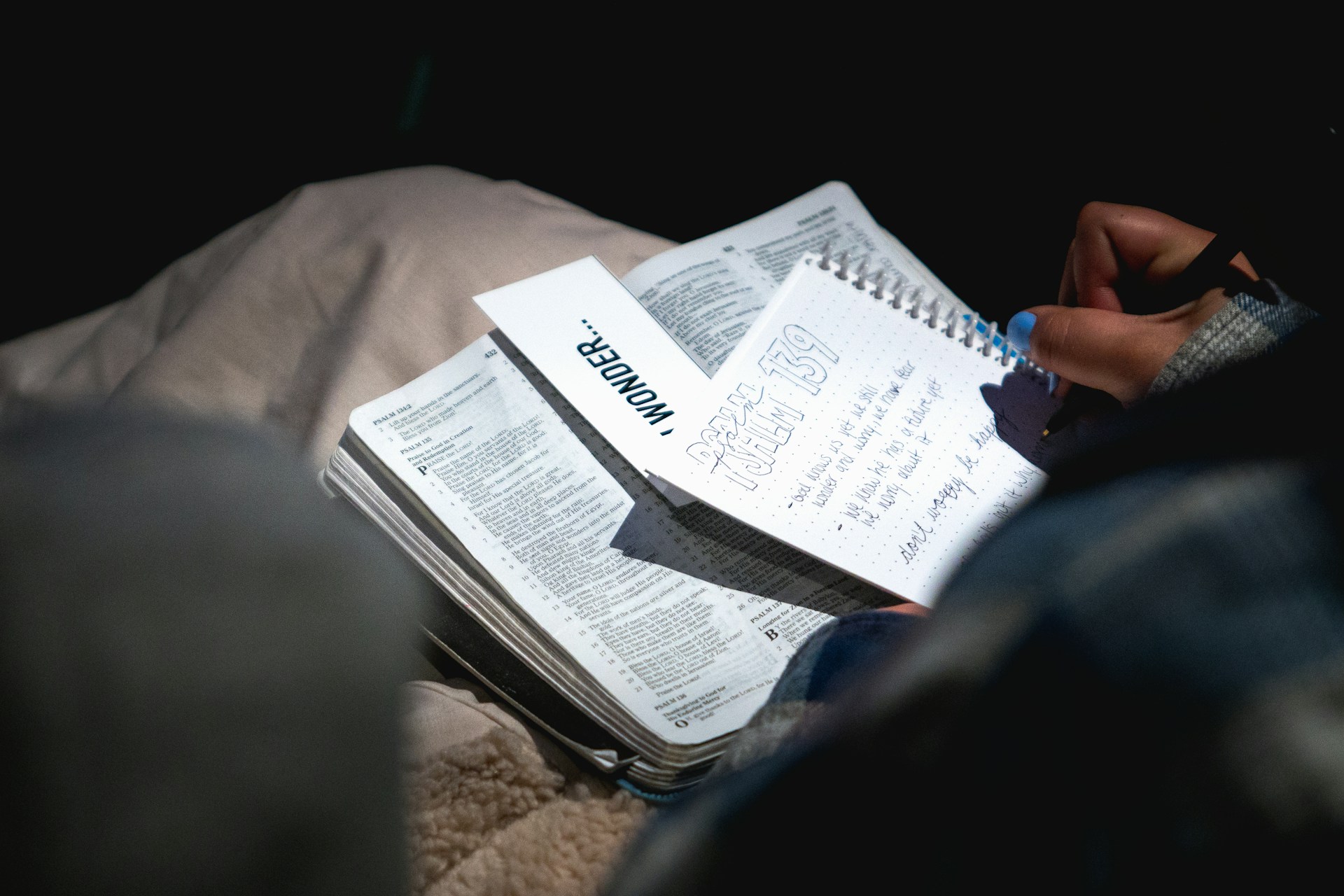
5 Day Devotional
This five-day devotional invites you to live from the truth that you were bought with a price and now belong to God. As you reflect each day, you will be challenged to exchange an ownership mindset for a stewardship mindset, letting the gospel reshape your priorities, desires, and identity.
Day 1
1 Corinthians 6:19-20
God’s Word makes a direct claim on our lives: we do not belong to ourselves. The sermon highlighted that salvation is not self-improvement or a spiritual add-on; it is a transfer of ownership purchased by Christ’s sacrifice. If Jesus paid for you, your life is not disposable, not random, and not driven by whatever the world normalizes.
This truth confronts the deepest assumption behind many struggles: “It’s my life.” When you believe you own you, you will naturally defend your right to decide, indulge, and prioritize. But when you receive the gospel honestly, you begin to say, “Lord, I am Yours,” and your body, time, relationships, and decisions become places where His rightful ownership is honored.
Today, let this land personally. You were rescued from sin and from a real eternity apart from God, not merely recruited into a religion. You are the temple of the Holy Spirit, and God’s presence in you is not a decoration—it is a declaration that you belong to Him.
- Where do you most feel the instinct to say, “It’s my life, I’ll do what I want”? Be specific.
- What emotions rise in you when you hear, “You do not belong to yourself”—comfort, resistance, fear, relief? Why?
- Write a simple prayer of surrender that names one area you have treated as private property.
- What would change this week if you truly believed your life is not disposable but claimed by God?
- Identify one habit that dishonors God’s ownership of your body or mind; choose one concrete step to begin changing it today.
Day 2
Romans 12:1-2
If you belong to God, the next step is learning to think like someone who belongs to God. The sermon emphasized that transformation requires a changed mind, because many biblical “rules” feel unreasonable when we assume ownership. Romans calls you to offer yourself to God and to stop being shaped by the world’s patterns.
The world trains you to treat your desires as directives and your preferences as authority. But a steward asks first, “What does the Master want?” This shift is not meant to crush you; it is meant to free you from being enslaved by impulses, culture, and the fear of missing out. God renews your mind so you can discern what pleases Him and what leads to life.
Today, notice the inputs shaping your thinking. What you binge, who you listen to, and what you repeatedly tell yourself will either reinforce ownership or cultivate stewardship. Invite the Holy Spirit to rewire your reflexes so obedience becomes reasonable and worship becomes normal.
- Name one “pattern of this world” you have copied without realizing it (values, speech, spending, sexuality, revenge, comparison).
- What is one thought you often repeat that reinforces self-ownership (for example, “I deserve this”)? Replace it with a truth from today’s scripture.
- Choose one input to limit for 24 hours (social media, news, entertainment) and one input to increase (Scripture, worship, prayer).
- In one decision you have to make soon, what would it look like to ask, “What does the Master want?” before asking what you want?
- Write down one evidence of growth you want to see in your mindset over the next month, and ask God for grace to pursue it.
Day 3
Luke 16:19-31
The sermon reminded us of an uncomfortable but necessary truth: eternity is real, and hell is real. Jesus’ story of the rich man and Lazarus is not meant to satisfy curiosity; it is meant to awaken urgency. Earthly comfort can deceive, and earthly suffering does not define a person’s final destiny.
This passage also exposes how easily we confuse God’s mission with our preferences. The rich man had resources but no surrender; Lazarus had little but was received into comfort with God. The point is not that money is automatically evil or poverty automatically holy, but that life now is preparing you for life forever. If you belong to God, you live with eternity in view.
Let this re-order what matters. God’s greatest rescue is not from inconvenience but from separation from Him. When you remember what you were saved from and what you were saved for, you stop treating faith as a tool for benefits and start treating faith as the path of belonging to Jesus.
- How often do you think about eternity in a normal week, and what does that reveal about your priorities?
- Where have you been tempted to measure God’s love by comfort, outcomes, or answered prayers?
- Who is one person in your life who needs the hope of Jesus? Pray for them by name and plan one step of loving outreach.
- What is one “temporary” thing you’ve been treating like it is ultimate (status, pleasure, money, approval)?
- Ask God to deepen your gratitude for salvation; write a short thank-you prayer for what He has rescued you from.
Day 4
Matthew 6:33
A stewardship mindset shows up in what you seek first. The sermon challenged the tendency to put “the by-the-way” ahead of the main thing—chasing blessings while neglecting belonging. Jesus teaches that when you seek God’s kingdom first, the Father knows what you need and adds what is necessary in His wisdom.
This does not mean you stop caring about practical needs; it means your needs no longer sit on the throne. When you belong to God, your schedule, money, energy, and attention become resources to be managed for His purposes. Priorities reveal what you value, and what you value reveals who you believe owns your life.
Today is an invitation to reorder your day around the King. Start small but sincere: first-fruits time, first-fruits attention, first-fruits obedience. As your “first” becomes God, you will begin to experience peace that doesn’t depend on extras and contentment that doesn’t collapse when circumstances fluctuate.
- What are your current “first” priorities (time, money, attention)? List your top three and evaluate them honestly.
- What is one practical way to seek the kingdom first today (prayer before phone, generosity, serving, reconciliation, Scripture)?
- Where are you most anxious about provision or outcomes? Turn that specific area into a prayer of trust.
- Review your calendar for the next seven days; what one change would better reflect God’s ownership of your time?
- Choose one act of obedience you have delayed; take one concrete step toward it within the next 24 hours.
Day 5
1 Peter 1:18-19
You were bought with a price, and the price was not cheap. The sermon pointed to the willing suffering of Jesus—He could have called rescue, but He completed the mission. Your redemption cost the blood of Christ, which means your new life is not a casual upgrade but a holy calling.
Peter ties the cost of redemption to a new way of living. When you remember the price, sin stops looking harmless and the “old life” stops looking nostalgic. The sermon warned against romanticizing Egypt—forgetting the slavery and remembering only the scraps. Sin is expensive, and returning to it always overpromises and underdelivers.
End this devotional by choosing allegiance. Belonging to God is not merely a belief you hold; it is a life you live. Ask Jesus to make your gratitude durable, your surrender practical, and your devotion consistent—so your everyday choices preach the same message as your Sunday confession.
- What is one area where you have been tempted to return to an “empty way of life” because it feels familiar?
- How does remembering the cost of Jesus’ blood change the way you view that temptation?
- Write one sentence that describes your identity in Christ (for example, “I belong to Jesus, and my life is His”).
- Choose one boundary you need to set to honor God’s ownership (media, relationships, spending, secrecy, substances).
- Make a simple plan for the next week: one daily practice (5–15 minutes) that helps you live like you belong to God, and commit it to prayer.

Parent Guide
This guide is meant to equip you with discussion questions and conversation starters that you can use throughout the week to continue the conversation about what you and your kids learned on Sunday.
Sermon Summary
In case you missed it, or if you just need a refresher, here’s a quick summary of what we talked about this week in the sermon:
Jesus’ core message is that Christ rescued us from hell by paying the highest price, so believers no longer belong to themselves—our lives are God’s possession and must reflect His ownership (1 Corinthians 6:19). The sermon calls us to shift from an “I own my life” mindset to stewardship, prioritizing what the Master wants instead of chasing blessings, and living daily like we truly belong to God.
Conversation Starters
These are things you can talk about with your kids to help further the conversation about what they may have learned on Sunday.
How does believing “you do not belong to yourself” challenge the way you make everyday decisions about your time, body, relationships, and money?
Talk about the shift from ownership to stewardship: instead of “what do I want,” the first question becomes “what does the Master want.” Share practical areas where this would reorder priorities (schedule, habits, spending, entertainment) and what resistance or freedom that brings.
What parts of your “old life” still feel appealing or comforting, and why might going back be tempting even when you know God has delivered you?
Reflect on the sermon’s picture of Israel craving “cucumbers in Egypt”—the pull of familiar patterns, even if they were enslaving. Discuss what that old life promises (control, pleasure, approval) versus what it actually costs spiritually, emotionally, and relationally.
What does it look like to pursue Jesus for salvation first rather than primarily for blessings, healing, or prosperity, and how does that reshape your expectations of God?
Explore the idea that Christ’s main mission is rescuing souls from hell and leading us to eternity with God; other gifts are real but not the foundation. Consider how faith holds steady when prayers aren’t answered the way you want, and how you can still call God good in lack or suffering.
How have you seen a “car before the horse” mindset show up in your own faith, and what practices could help you keep God’s purpose primary?
Identify where “by the way” blessings have become the main pursuit—status, comfort, success, or even spiritual experiences. Consider practices like examining your calendar and budget, prayer that asks for God’s will first, and community accountability that re-centers your motives.
What helps you accept the truth of eternity—both heaven and hell—without avoiding it or trying to soften it, and how should that truth affect the way you live and love others?
Discuss the sermon’s point that hard truth shouldn’t be “cut down,” but received with humility and urgency. Consider personal responses (repentance, gratitude, holy living) and outward responses (compassionate evangelism, prayer for others, living as a witness without manipulation or fearmongering).
Bought with a price | Living like You Belong to God 03-22-2026: Group Leader Guide
Sermon Recap 🎬️
The sermon’s main message is that salvation means a complete transfer of ownership: believers no longer belong to themselves because Jesus “bought” them at a very high price. Using the picture of a car that has been sold, the speaker explains that once ownership changes hands, the former owner no longer has the right to control how it’s used. In the same way, when Christ rescues and redeems a person, that life is no longer disposable or self-directed—it belongs to God.
Rooted in 1 Corinthians 6:19 (“you do not belong to yourself”), the sermon calls listeners to change their mindset from ownership to stewardship. Many struggles with obedience—how we use our time, money, bodies, and choices—come from thinking, “It’s my life; I can do what I want.” But a steward asks first, “What does the Master want?” Priorities reveal values, and living like we belong to God means structuring life around pleasing Him rather than serving ourselves or the world.
The speaker also clarifies the purpose of Christ’s coming, especially as Easter approaches: Jesus died, was buried, rose, and ascended to save us from hell and bring us into eternity with God. Blessings like healing, prosperity, and deliverance may come, but they are not the main mission and they are not proofs of God’s goodness. God remains God even if a believer is still struggling, and faith cannot be built on the promise that all problems disappear after coming to Christ.
Through examples like Lazarus and the rich man, the sermon warns against returning to an “empty life” of sin and against treating “by the way” blessings as the primary goal. The call is to repent of self-centered Christianity, accept that “it’s all about Jesus,” and live daily—thinking, deciding, and prioritizing—like someone who truly belongs to God.
You do not belong to yourself.
Discussion Questions 💬
How does believing “you do not belong to yourself” reshape the way you make everyday decisions about your time, body, relationships, and money?
Talk about the difference between acting like an owner versus a steward. An owner asks, “What do I want?” while a steward asks, “What does God want with what He entrusted to me?” Share one area where a stewardship mindset would change your next practical step this week.
What parts of your life are most tempted to drift back to an “old life” mindset, and why can going back feel attractive even when it was empty or costly?
Reflect on how nostalgia can hide the true price of sin and the hidden damage it causes over time. Identify the “cucumber in Egypt” story in your own life—something you romanticize that actually kept you stuck. Discuss what helps you remember what God delivered you from without living in shame.
What does it look like to pursue Jesus for salvation and belonging—not primarily for benefits like healing, prosperity, or problem-solving—and why is that hard to keep straight?
Explore how disappointment can grow when we treat God like a means to an outcome rather than the greatest treasure. The sermon emphasized that God remains God even when circumstances don’t change, and that salvation is the core mission. Share how your faith responds when prayers aren’t answered the way you hoped.
How does the idea of being “bought with a price” change the way you view your worth and the way you treat yourself when you feel disposable, ashamed, or discouraged?
Discuss how redemption assigns value: if Christ paid for you, your life cannot be throwaway or meaningless. This can challenge both self-hatred and self-centeredness—your identity is received, not achieved. Share a specific truth you need to tell yourself when you forget your value to God.
What priorities in your schedule reveal what you truly value, and how might your week look different if “what does the Master want” became the first question?
Use the sermon’s point that priorities expose values, and everyone has the same 24 hours. Consider how spiritual practices, rest, work, and generosity shift when they are responses to ownership rather than pressure or guilt. Invite the group to name one concrete “reorder” they sense God prompting.
Prayer 🙏
- May we embrace the truth that our lives are not disposable or self-owned, choosing daily to live as people redeemed at great cost and treasured by God.
- May we allow God to reshape how we think about our bodies, time, and resources, practicing stewardship by asking what honors the Owner before we follow our own impulses.
- May we resist the pull to return to old, empty patterns that once enslaved us, taking specific steps to break agreement with sin and walk in the freedom Christ purchased.
- May we seek God for God—not merely for blessings—holding steady in faith when prosperity or comfort is delayed, and trusting that salvation and eternity remain the central gift.
- May our priorities reveal a renewed value system, making room each day for worship, obedience, generosity, and holy choices that reflect a life lived like it belongs to God.
Rewatch the Sermon 📼